Musical Princess Car phone Toy
- 3.5
- Rating
- 5.00M
- Installs
- Free
- Price

 Analysis by App-foxy
Musical Princess Car phone Toy is the kind of game I would place in the hands of a young child who enjoys bright colors, pretend phones, princess themes, and simple musical play. It is an educational game for Android, developed by himanshu shah, and its main appeal is easy to understand: it turns a pink car phone into a playful setting for short activities aimed especially at girls. I found it more suitable for casual, supervised play than for children looking for a deep game with a long progression system.
The game is free to download, which makes it easy to try without asking a parent to commit money first. It is rated for Everyone, and it runs on Android 8.0 or later. The current version is 2.5, while the game first appeared on April 6, 2022. Those details matter because this is primarily a quick-access children’s title rather than something I would install expecting a large, constantly changing adventure.
How the basic play experience works
The most useful way to approach Musical Princess Car phone Toy is to treat it as a collection of short play moments rather than a conventional level-based game. A child can open it, explore the princess-themed phone setting, interact with the available activities, and move on whenever attention starts to wander. That simple rhythm is a strength for preschool and early-school users who may not want instructions that take several minutes to understand.
You May Also Like

 Blood Strike: 2.5 Anniversary
Blood Strike’s Loadouts Turn Every Drop Into a Tactical Gamble
A close look at Blood Strike’s custom loadouts: how fast access to signature weapons reshapes its battle royale rhythm, rewards preparation, and narrows the gap between fights.

 Pandora - Music & Podcasts
Pandora’s Music Is Easy to Start, but Harder to Recover
Pandora’s strength is its low-effort path from a seed to a station. Its weak spot is how much confidence it asks you to place in connection, setup, and quiet recovery.

 8 Ball Pool
 Is Built on Rivalries, Rematches, and Routine
A close look at the rivalries, rematches, shared routines, and unanswered safety questions that turn a quick pool match into a persistent mobile community.

 Samsung Music
’s Quiet Strength Is Playing What You Already Own
Its reach comes less from spectacle than from dependable access to a personal library. That simplicity is both the app’s strongest retention engine and its ceiling.

 AccuWeather: Weather Radar
AccuWeather Review: A Quick, Clear Forecast for Everyday Decisions
For everyday plans, the best forecast is the one you can understand quickly. AccuWeather makes rain timing, radar, and local conditions easy to act on, with a few trade-offs.

 Hill Climb Racing
Why Hill Climb Racing Still Turns Crashes Into One More Run
A tiny car, a bumpy hill and one more upgrade: Hill Climb Racing keeps resurfacing because its simple chaos makes every near-miss feel personal.
More From Our News Desk



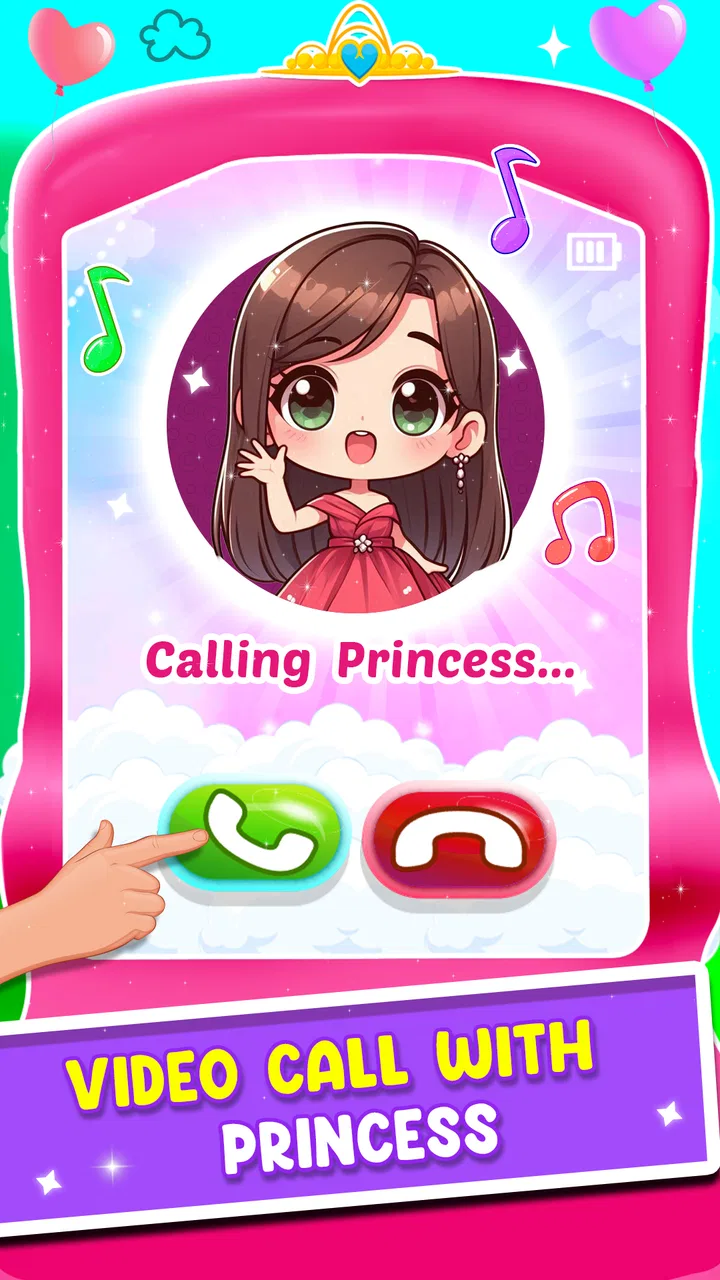
In my experience, the pink car-phone presentation does a lot of the work. It gives the game a recognizable pretend-play frame, so a child is not simply tapping unrelated buttons on a screen. The phone idea encourages role-play: calling, exploring, listening, and imagining a princess-themed conversation. Even when the interactions are straightforward, that context can make the session feel more personal than a basic educational quiz.
The musical side is also important. Children who respond better to sound and rhythm than to written instructions may find this more inviting than a traditional learning app. I would introduce it by sitting with the child for the first session, showing how to move from one activity to another, and then allowing the child to repeat the parts that feel most enjoyable. That approach avoids turning a playful app into a forced lesson.
The best baseline habit is short, guided exploration followed by independent repetition. I would not hand over the phone and expect a child to understand every interaction immediately. Instead, I would demonstrate one action, let the child copy it, and then pause. This makes it easier to see which activities genuinely hold attention and which ones are being tapped randomly.
Why the pretend-phone format matters
Many educational games rely on matching cards, counting exercises, or colorful quizzes. Musical Princess Car phone Toy uses a different entry point: it makes the device itself part of the fantasy. That can be especially useful for children who enjoy imitating adults using phones, but it also means the learning value depends heavily on how the child engages with the activities. The theme creates motivation; it does not replace active guidance.
I would use it during a quiet transition, such as after getting ready for school or while waiting for an appointment, rather than as a full afternoon activity. The short-session design is a better match for those moments. A parent can also use the game as a starting point for conversation: ask the child what the princess is doing, which sound they liked, or what they would say on the pretend phone. That turns passive tapping into language practice and imaginative play without pretending the app is a complete curriculum.
Settings and preparation worth checking
Before giving the game to a child, I recommend checking the phone’s general settings rather than assuming the game will handle every family preference. The most practical checks are the device volume, notification behavior, screen-time controls, and whether purchases are protected by the device’s parental authentication. The game includes in-app purchases priced at $0.49 per item, so I would make sure a child cannot approve purchases accidentally.
This is one of those small preparation steps that makes a noticeable difference. A musical children’s game can become frustrating if the sound is too loud, too quiet, or interrupted by unrelated notifications. I prefer setting a comfortable volume before the child starts and enabling the device’s child-safety controls where available. That keeps the session focused on the game instead of turning it into a lesson about phone settings.
The age rating of Everyone makes the game broadly approachable, but I would still match it to the individual child. A younger user may need help understanding what each button does, while an older child may quickly decide that the activities are too simple. The rating is useful as a general guide, not a guarantee that every child will find the same level of challenge enjoyable.
There is also a practical difference between playing with sound and playing silently. Music is part of the game’s identity, so muting the device may remove some of its appeal. On the other hand, silent play can be useful in a waiting room or during travel. I would test both modes with the child and explain that the game can still be explored quietly when the surroundings require it.
Repeatable play patterns that work better
Experienced use here is less about discovering secret mechanics and more about building a repeatable routine. I would begin with free exploration, then choose one or two activities for repetition, and finish by letting the child select a favorite. This pattern prevents the session from becoming an endless sequence of random taps and gives the child a little ownership over what happens next.
Another useful habit is to keep the game connected to a real-world theme. If the child is interested in cars, I might ask them to imagine where the princess is traveling. If they are interested in music, I might invite them to copy a rhythm or describe the sounds. The app supplies the visual and audio prompt, while the adult adds the conversation that makes the experience more educational.
For independent play, I would watch for signs that the child understands the interaction rather than simply repeating a motion. Can they return to a preferred activity? Do they recognize what a button does? Can they explain what they are pretending to do? Those observations are more useful than counting how long the app remains open. A short session with active imagination can be more valuable than a longer session filled with aimless tapping.
I also recommend rotating it with other activities. Musical Princess Car phone Toy works well as one option in a small collection, alongside drawing, reading, physical play, or a more structured learning app. Its strongest role is keeping a child engaged through theme and sound. It is not the app I would choose as the only educational tool in a child’s routine.
Where it compares well with ordinary alternatives
Compared with a standard educational quiz, this game is friendlier for children who are not ready to read much or follow multi-step written directions. The princess and car-phone setting provides an immediate visual cue, and the musical presentation can make the first interaction feel less like homework. That makes it a reasonable choice for casual introduction to touchscreen play.
Compared with open-ended dress-up or pretend-play games, it offers a more focused phone-and-music identity. A child who wants a clear object to explore may prefer this over a large virtual world with many menus. The trade-off is that the experience may feel limited sooner, especially for children who want character customization, story progression, or increasingly difficult challenges.
Compared with a serious early-learning app, it is lighter and more entertainment-led. I would choose a dedicated literacy, numeracy, or language app when the goal is measurable practice. I would choose Musical Princess Car phone Toy when the goal is a playful break that can encourage sound recognition, imagination, simple interaction, and conversation.
Limits that become clearer over time
The same simplicity that makes the game approachable can also reduce its long-term appeal. Children who quickly master the available interactions may run out of novelty, particularly if they expect new stages or a stronger sense of progression. I would not present it as a game that grows with a child for years. It is better understood as a themed activity that may remain enjoyable through repetition for some users and become familiar quickly for others.
The princess-focused design is another consideration. A child who loves that theme may feel immediately welcomed, while another child may not connect with it at all. The store summary specifically positions the experience toward girls, but I would judge suitability by the child’s interests rather than by the label. Any child who enjoys musical pretend play could potentially like it, and a child who dislikes princess themes may skip it regardless of age.
In-app purchases also create a boundary that parents should manage. The individual price is low, but repeated purchases can still matter in a child’s environment. I would not rely on the word “free” alone; I would protect purchases through the device and explain that anything involving payment requires an adult. That is a simple, repeatable household rule and avoids an unpleasant surprise later.
The average rating is 3.5 from around one thousand ratings, and the game has passed one million installs. I read that combination as evidence of broad curiosity and a mixed overall reception rather than a reason to assume universal satisfaction. The number of reviews shown is seven, so I would place more weight on trying the free version with the intended child than on treating the rating as a complete verdict.
Who should install it, and who should look elsewhere
I think it is a good fit for a young child who likes princess imagery, pink vehicles, musical sounds, and pretend phone play. It is also useful for parents who want a free first try before considering paid children’s software. The Everyone rating and support for Android 8.0 or later make it accessible on many devices, although the child’s comfort with touch controls remains more important than the technical requirement.
I would skip it if the main purpose is structured academic learning. A dedicated early-learning app will usually be a better choice for phonics, arithmetic, reading practice, or progress tracking. I would also look elsewhere for a child who needs a story campaign, complex puzzles, multiplayer play, or a substantial reward system. This game’s charm comes from its theme and accessibility, not from depth.
It may also be the wrong choice for families who want a completely purchase-free children’s environment. The in-app purchase option means the device should be configured carefully before use. That is manageable, but it is still part of the ownership experience and should not be ignored simply because the initial download costs nothing.
My practical verdict after settling into a routine
After using it as a short, supervised activity, I see Musical Princess Car phone Toy as a pleasant niche game rather than an all-purpose educational solution. Its strongest qualities are the approachable pretend-phone concept, the musical presentation, and the way the princess theme gives a young player an immediate reason to explore. It is easy to recommend as a trial because the base game is free and the controls are aimed at simple interaction.
Its weaknesses are equally clear: the experience may not challenge children for long, the theme will not suit everyone, and parents need to manage the purchase option. I would also keep expectations realistic about education. The app can support playful conversation and basic exploration, but it should sit beside richer learning and offline activities rather than replace them.
My preferred routine is to check the volume and purchase protections, introduce the game together, let the child repeat a favorite activity, and then connect what happened on screen to a real conversation. That workflow gets more value from the app than simply leaving it running. For a child who enjoys musical princess pretend play, it is worth trying; for a child seeking depth or formal learning, another category of app will be the better investment.
Overall, I would recommend it selectively. The game has a clear audience and delivers a friendly, colorful way to spend a few minutes, but its appeal depends on the child’s personality and the parent’s expectations. If the pink car-phone idea immediately interests your child, the free entry point makes experimentation sensible. If the theme does not connect or the child wants increasingly difficult challenges, moving on will probably be the right decision.
FAQs for Musical Princess Car phone Toy
01What age group is the Musical Princess Car Phone Toy suitable for?
The Musical Princess Car Phone Toy is designed for children aged 3 to 6 years. It offers simple interactive features that are easy for young kids to understand and enjoy. The app includes colorful graphics and engaging sounds that are perfect for preschoolers, helping them develop basic motor skills and coordination.
02Does the app require an internet connection to function?
No, the Musical Princess Car Phone Toy does not require an internet connection to function. Once downloaded, all features are available offline, making it a great option for entertainment during travel or in areas with limited connectivity. However, an internet connection may be needed for updates.
03Are there any in-app purchases or advertisements in the game?
The app is free to download and play, but it may contain optional in-app purchases to unlock additional features or content. There are also ads that appear occasionally. Parents are advised to monitor purchases and ad exposure, ensuring a safe and controlled environment for their children.
04What educational benefits does the app offer?
The Musical Princess Car Phone Toy provides several educational benefits for young children. It aids in developing hand-eye coordination and fine motor skills through interactive play. The app also introduces basic musical concepts and encourages imaginative play, fostering creativity and cognitive development.
05Is the app available for both Android and iOS devices?
Yes, the Musical Princess Car Phone Toy is available for both Android and iOS devices. You can download it from the Google Play Store or Apple App Store. It is optimized for various screen sizes, ensuring a smooth and enjoyable experience across smartphones and tablets.
Pros
- Engaging music and sound effects.
- Bright and colorful graphics.
- Simple interface for young kids.
- Encourages creativity and imagination.
- Safe
- ad-free environment.
Cons
- Limited educational content.
- Repetitive gameplay may bore quickly.
- In-app purchases can add up.
- Requires internet for some features.
- Small screen buttons can be tricky.

Musical Princess Car phone Toy
Gallery